Look to Dairy to Help Meet Your Vitamin D Needs

 
With claims about the health benefits of vitamin D on the Internet, on medical TV talk shows, and in almost daily news releases, you may wonder how much vitamin D you need and how best to meet your needs for this vitamin. You may be surprised to learn that cow’s milk is the number one source of vitamin D in the American diet. Nearly all commercial brands of cow’s milk are fortified with vitamin D, and many vitamin D-fortified yogurts and some vitamin D-fortified cheeses are appearing in grocery stores to help people meet their vitamin D needs.

Vitamin D’s Role in Health

The importance of vitamin D in supporting bone health is well established by scientific evidence. Vitamin D helps maintain normal blood levels of calcium and phosphorus by enhancing their absorption. This, in turn, promotes bone growth and maintenance.

Classic vitamin D deficiency diseases include rickets in young children and osteomalacia in adults. Rickets is characterized by stunted growth, bowed legs, and delays in motor development. Recently, a physician at the University of Tennessee’s Health Science Center in Memphis suggested that Tiny Tim, one of the most enduring characters in Charles Dickens’ 1843 novel, “A Christmas Carol,” likely suffered from rickets. This disease was essentially eliminated in the U.S. decades ago following the fortification of fluid milk with vitamin D in the early 1930s. Although rare, rickets in young children has made an unexpected comeback in the U.S. in recent years, especially among African Americans. Osteomalacia is a painful condition in adults characterized by the softening, weakening, and demineralization of bones. Long-term vitamin D (and calcium) deficiency can lead to osteoporosis and increased susceptibility to fractures.

Vitamin D Status

Heightened interest in vitamin D also stems from reports of widespread vitamin D deficiency. The 2010 Dietary Guidelines for Americans calls vitamin D “a nutrient of public health concern” for children and adults, citing low dietary intake. In particular, individuals who are older and living in institutions or who have dark skin pigmentation may be at increased risk for vitamin D deficiency. According to a recent report from the Centers for Disease Control and Prevention (CDC), vitamin D deficiency is much higher among non-Hispanic African Americans than Mexican Americans or non-Hispanic whites.

Sources of Vitamin D

We obtain vitamin D from two sources: sunlight and diet. Vitamin D is called the “sunshine vitamin” because it can be synthesized in the skin when exposed to ultraviolet light from the sun. About 5 to 15 minutes of sun two or three times a week on our face, hands, and arms – without sunscreen – is considered to be sufficient to meet our vitamin D needs. However, some people may not get enough sun exposure to meet daily vitamin D recommendations. The amount of vitamin D synthesized in the skin varies widely and depends on many factors that can decrease vitamin D synthesis in the skin:

• Aging
• Increased skin pigmentation
• Use of sunscreens
• Clothing
• Winter season
• Living in northern latitudes
• Cloud cover
• Smog

Researchers speculate that lack of exposure to sun and the resulting vitamin D deficiency may have contributed to the untimely death in 1791 of the Austrian music composer, Wolfgang Amadeus Mozart, at the age of 35.

When sun exposure is limited, consuming foods and beverages providing vitamin D becomes increasingly important to meet vitamin D needs. Only a few foods naturally contain vitamin D:

• Oily marine fish (e.g., mackerel, salmon, herring)
• Cod liver oil
• Egg yolks
• Sun-exposed mushrooms

For this reason, some foods are fortified with vitamin D, beginning with fluid milk in 1932. In the U.S., fluid milk and other dairy foods such as yogurts and some cheeses, as well as some breakfast cereals, breads, and juices are fortified with this sunshine vitamin. Nearly all cow’s milk sold in the U.S. is fortified with vitamin D to obtain a standardized amount . To ensure that the level of vitamin D fortification of milk meets specifications, milk is routinely tested for its vitamin D content. Milk monitoring is conducted primarily by state governments in cooperation with the U.S. Food and Drug Administration.

When a food is fortified with vitamin D in the U.S., vitamin D must be listed on the Nutrition Facts panel as a percentage of the Daily Value (DV) . Since the American Medical Association, Council on Food and Nutrition endorsed vitamin D fortification of milk in 1933, other health professional organizations, such as the American Academy of Pediatrics, have supported vitamin D fortification of fluid milk as an important public health measure to reduce the risk of vitamin D deficiency .

Foods naturally or fortified with vitamin D are the preferred source of this nutrient, according to health professionals. One reason why foods trump supplements is that foods such as cow’s milk contain other essential nutrients important for health. Take bone health for example. In addition to vitamin D, several other nutrients in fluid milk including calcium, magnesium, phosphorus, potassium, and protein work together to support bone health.

Bottom Line

All children, adults, and the elderly are encouraged to consume nutrient-rich foods naturally containing or fortified with vitamin D. Fluid milk is the number one source of vitamin D in the diets of Americans, according to the National Health and Nutrition Examination Survey (NHANES), 2003-2006. Consuming recommended daily servings of low-fat or fat-free milk – 3 cups for those 9 years and older – and other milk products fortified with vitamin D (e.g., some yogurts and cheeses) as part of a healthful diet can help meet vitamin D recommendations.

Posted in Cheese, Health benefits of dairy, Vitamin D, Yogurt | Tagged , , , , | Comments Off

Back-to-School time is the perfect opportunity to get Back-to-Breakfast!


It’s back-to-school time and important to give your kids a great start—not only a fresh start to the school year, but a healthy start every day of the year! A simple breakfast, whether at home or at school, helps boost brainpower and improve the overall nutrition intake for children of all ages. Research shows that kids who eat breakfast:

  • Have improved concentration
  • Score higher on tests
  • Behave better
  • Have improved attendance

So how can you and your family get back-to-school and back-to-breakfast?

  • Take advantage of the school breakfast programs.
  • Be a role model. Eat breakfast yourself and with your children when possible, and try to include at least 3 of the 5 food groups in your breakfast each morning.
  • Keep easy-to-serve breakfast foods on hand.

We all know breakfast is the most important meal of the day, so the next time you’re at the grocery store, remember to pick up some of these great grab-and-go options:

  • Ready-to-eat cereal (topped with seasonal fresh fruit)
  • Yogurt and fruit smoothies
  • Bananas
  • Milk (flavored or unflavored)

Here’s one of my favorite smoothie recipes of all time—it’s quick, easy, and very tasty!

Choco-Berry Swirl (yields 4 servings)

2 cups Low-Fat Vanilla Yogurt
3 ¼ cups of frozen whole strawberries (non-sweetened) – (if using frozen sliced strawberries then use 2 cups)
1/3 cup of Low-Fat or Fat-Free Milk (white or chocolate)

Combine all ingredients in a blender and mix until smooth.

Enjoy!

Posted in Nutrition, Shopping Tips | Tagged , , | Comments Off

Weeding Out Nutrition Misinformation: Dairy’s Role in Maintaining a Healthy Weight


With so much health and nutrition information floating around on the internet, it can be very difficult to know who or what to believe. As a registered dietitian, and one who works for Michigan dairy farm families, sharing science-based health information is extremely important to me.

Just the other day I came across an article that was like music to my ears, a study conducted and reviewed by third party health and nutrition experts. This study found that studies funded by National Dairy Council (supported and sustained by America’s dairy farmers) were not more likely to be favorable of dairy and healthy weight research than studies funded by other sources, including National Institute of Health (NIH). These findings reinforce the importance of the 2010 Dietary Guidelines for Americans that consumers should confidently include three servings of milk, cheese and yogurt every day for good health!

It’s clear that dairy farmer’s longstanding commitment to scientific research has resulted in a history of credible contributions to science, specifically in the area of dairy nutrition.

Are you looking for ways to get more dairy in your life, but pressed for time? Here are some quick and easy, grab-n-go options that are not only good for you, but they also taste great:

  • Low-fat string cheese
  • Low-fat cheese cubes and crackers
  • Yogurt
  • Fruit and yogurt dip (Mix fat free yogurt with a dollop of honey for a sweet fruit dip)
  • Yogurt smoothies with fruit
  • Low-fat and fat-free white milk chugs
  • Low-fat and fat-free flavored milk chugs
  • Fruit and yogurt parfaits

For more grab-n-go snack ideas, visit this link at www.NationalDairyCouncil.org.

Posted in Cheese, Health benefits of dairy, Milk, Nutrition, Uncategorized, Yogurt | Comments Off

Ways to celebrate June Dairy Month


June is Dairy Month and it’s the perfect time to celebrate dairy farmers’ commitment to healthy people, healthy communities and a healthy planet! June Dairy Month, an annual celebration that began in 1937, is traditionally a time to reflect on dairy foods and the industry that makes it possible. It was created as a way to help distribute extra milk when cows started on pasture in the summer months. June Dairy Month has continued to evolve over the years and communities, companies, and individuals across the country have embraced it and have become involved in many ways. The cooperation between farmers and other community members is really the basis of what June Dairy Month is all about – consuming and celebrating a wonderful product!

Today, people are reshaping health and wellness by redefining healthy food as foods they perceive to be real, fresh and natural. For many people “health and wellness” includes taking care of themselves and their families, exercising and eating right. As the nation turns its attention to reducing calories and people strive to be healthy, there is some good news – dairy foods can help! Nutrient-rich milk, yogurt and cheese can be delicious, guilt-free staples of a healthy diet, because dairy foods provide substantial nutrients per calorie, helping people make their decisions count.

Nutrient-rich dairy foods are one of the most economical sources of nutrition. In fact, few foods deliver dairy’s powerhouse of nutrients in such an affordable, appealing and readily available way. The 2010 Dietary Guidelines for Americans encourages children and adults nine years and older to enjoy three servings of low-fat or fat-free milk, cheese or yogurt every day. On average, Americans are only consuming about two dairy servings per day, so adding just one more serving of dairy can help fill American’s dairy and nutrient gap!

With all of the time constraints that come along with busy schedules, it’s important to remember to have nutritious foods throughout the day. As a registered dietitian and one who appreciates tasty, quick and easy meals and snacks, yogurt is at the top of my list! Yogurt packs a powerful nutrient punch; it is an excellent source of calcium and riboflavin, and a good source of protein, potassium and vitamin B12. Here are a couple delicious recipes that highlight yogurt and the nutrition that it provides.

Start your day the right way with a Berry Blast Smoothie:

http://www.nationaldairycouncil.org/Recipes/Pages/Berry-Blast-Smoothie.aspx

A colorful way to help you get your Three Every Day:

http://www.nationaldairycouncil.org/Recipes/Pages/Layered-Broccoli-Salad.aspx

Here’s a great treat that’s easy-to-pack or the perfect after dinner snack:

http://www.nationaldairycouncil.org/Recipes/Pages/Strawberry-Frozen-Yogurt-Squares.aspx

You’ll be licking your lips when you serve fresh veggies with this cucumber yogurt dip:

http://www.nationaldairycouncil.org/Recipes/Pages/Cucumber-Yogurt-Dip.aspx

To find 10 more ways to welcome yogurt and wellness into your life, please see this previous post: http://www.thedairydish.org/2012/01/31/10-ways-to-welcome-yogurt-and-wellness-into-your-life/

In order to properly celebrate June Dairy Month, it’s time to raise a glass of ice-cold milk, some cheese and crackers, or a fruit and yogurt parfait, and let’s toast America’s dairy farmers who make it possible to enjoy an abundance of fresh, delicious products every single day!

You are invited to visit the Michigan Dairy News Bureau’s website www.michigandairynewsbureau.com to learn more about dairy farmers and the dairy industry, plus get nutrition tips and more delicious dairy recipes from United Dairy Industry of Michigan at www.udim.org.

Posted in Health benefits of dairy, Nutrition, Recipes, Yogurt | Tagged , , , , | Comments Off

The Dish on a New Contributor


Hello Dairy Dishers!

My name is Amy Viselli, I am a registered dietitian and Manager of Nutrition Outreach for United Dairy Industry of Michigan. Before I get started blogging, I want to take a little time to introduce myself, so you get a better feel for who I am and why I’m here. I’ve been excited about health and wellness my entire life and I’m happy to be able to share some of the great information I’ve learned about the importance of good nutrition and regular physical activity throughout the years!

Growing up in a small mid-Michigan town, it was important for us to have “family dinners,” to try new foods together, and to be involved in activities that promoted physical activity, health, wellness, and togetherness.

I spent a lot of my free time participating in gymnastics and diving, so when I was given the opportunity to attend Michigan State University and be an active member of their Women’s Swimming and Diving Team, I dove in head first! During my time at MSU, I studied dietetics and kinesiology with a health promotion specialization. After college, I moved to the big city of Chicago to complete my dietetic internship at Loyola University Chicago, where my passion for nutrition grew exponentially.

I started my career as a clinical dietitian in a small town hospital and realized that I desired to work in a community setting, encouraging healthy lifestyles through health promotion. A well balanced diet, which includes milk, cheese and yogurt, has always been an important part of my life, so as a registered dietitian it was a perfect fit when I started working with UDIM two years ago.

I look forward to having the opportunity to share scientific, evidence-based information with you on the Dairy Dish. Just the other day I came across a great article that highlights the benefits of chocolate milk, a childhood favorite of mine!

I think Dr. John Pfenninger put it best when he wrote, “Milk may be the most nutritious item that many children receive, especially those of low income who are at high risk of malnutrition.”  He goes on to explain, “Low-fat or no-fat chocolate milk does have the potential for a slight increase in calories in a child’s diet, but provides a very high nutrient value, especially when compared to sodas/pop and sugar sweetened fruit juices.”

Until next time…

Posted in flavored milk, Nutrition | Tagged , | Comments Off

Foods that Fight High Blood Pressure

According to the American Heart Association, one in three adults has high blood pressure. Even young adults are not immune. A new study published in the journal Epidemiology found that high blood pressure affects one in five young adults.

If uncontrolled, high blood pressure can lead to heart disease, kidney disease, stroke and blindness.

High blood pressure, also known as hypertension, is defined as blood pressure higher than 140/90 millimeters of mercury (mmHg).

The good news is that high blood pressure can be prevented and treated by lifestyle changes such as following a healthful eating plan. Research indicates that the Dietary Approaches to Stop Hypertension (DASH) eating plan significantly lowers blood pressure. DASH also may lower total cholesterol and LDL cholesterol, improve bone health, and improve the body’s ability to manage blood glucose levels.

The DASH eating plan is endorsed by the American Heart Association, the Academy of Nutrition and Dietetics (formerly the American Dietetic Association), the National Medical Association and the National Heart, Lung and Blood Institute. In January 2012, U.S. News & World Report released its second annual evaluation of 25 popular diets. DASH ranked number one in the categories of Best Diets Overall, Best Diets for Healthy Eating and Best Diabetes Diets.

By following the DASH eating plan, blood pressure may drop significantly in just 1-2 weeks. In studies of people with stage 1 hypertension (140-159/90-99 mmHg), research shows DASH lowers blood pressure as much as taking one high blood pressure medication. When those same people exercised regularly, further reduced salt intake and lost weight, the effect was the same as taking two blood pressure medications.

DASH is basically a well-balanced, plant-based eating plan. There’s no need for special foods or hard-to-follow recipes and there are excellent resources to help with meal planning, grocery shopping and meal preparation (see “Doing DASH?” below).

What is DASH’s secret weapon against high blood pressure? It dishes up a cornucopia of nutrient-rich foods: fruits, vegetables, whole grains, fat-free and low-fat dairy products and lean sources of protein. The nutrients in these foods—such as potassium, calcium, magnesium and protein—work together to help lower blood pressure. DASH is also low in total fat, saturated fat, cholesterol, added sugars, and moderate to low in sodium.

“I recommend DASH because it’s a really good, balanced eating plan,” says Laura McCain, registered dietitian and chef with Munson Medical Center in Traverse City, Michigan. “Often, people feel that eating healthy is complicated and so they give up, or make it so rigid that they can’t do it. The DASH eating plan gives an overall picture of balanced eating. I encourage people to look at the meal plan and menus to see, in general, what meals should look like. Then, they can take those concepts and make it fit with their tastes and lifestyle.”

McCain believes the reason many people don’t eat healthfully is that they don’t know how to cook. “It just takes figuring out how to make food taste better,” she says. “Learning to cook is a mentoring process. Look for cooking classes and demos in your community, start a cooking club with friends, or watch the cooking channel or online cooking videos. The classes will teach you techniques and help you build a Rolodex of recipes in your head. You can always use a cookbook, but when you’re tired, it’s nice to be able to make something that you’ve made so many times, it’s automatic.”

Doing DASH? Resources to Help:

DASH Diet Oregon

Your Guide to Lowering Your Blood Pressure interactive website, National Heart, Lung and Blood Institute

In Brief: Your Guide to Lowering Your Blood Pressure with DASH (6 pages)

Your Guide to Lowering Your Blood Pressure with DASH (64 pages)

DASH Diet: Healthy Eating to Lower Your Blood Pressure, Mayo Clinic

Daily DASH Diary, National Dairy Council

DASH Health Education Kit, Dairy Council Digest

Spotlight on Dairy Foods: Dairy Nutrients & Blood Pressure, Dairy Council Digest

Book: The DASH Diet Action Plan by Marla Heller

Posted in Health benefits of dairy, Interviews of experts, Nutrition | Tagged , , , , , | Comments Off

What’s on your plate–and in your cup?

How many times have you heard the recommendation to “eat a well-balanced diet”? Probably so often that the saying has lost its impact—and possibly gained the power to perturb. What does “eat a well-balanced diet” mean, anyway?

Every five years since 1980, the U.S. Department of Agriculture has provided Americans with updated Dietary Guidelines as well as a visual representation of the recommendations to help us understand and apply them to our lives. In June 2010, MyPyramid was replaced with MyPlate, the visual representation of the recently released 2010 Dietary Guidelines for Americans.

MyPlate illustrates the five food groups that are the foundation of a healthful eating plan. The plate is divided into four sections for vegetables, fruits, grains and protein; the cup represents dairy products such as milk, cheese and yogurt.
• Vegetables – Make half your plate fruits and vegetables: Vary your veggies
• Fruits – Make half your plate fruits and vegetables: Focus on fruit
• Grains – Make at least half your grains whole grains
Milk and milk productsGet your calcium-rich foods: Switch to fat-free or low-fat (1%) milk
• Protein – Go lean with protein: Vary your protein food choices

In a realistic manner, the MyPlate graphic shows us what a well-balanced meal should look like as we sit at the table, ready to enjoy nutrient-rich foods and beverages.

And enjoyment is a significant part of MyPlate’s philosophy. Instead of focusing on what not to eat, MyPlate emphasizes what we need to eat more of—vegetables and fruits, whole grains, milk and milk products and seafood—in order to get key nutrients that most Americans are lacking. Enjoyment of nutrient-rich foods; being physically active; and cutting back on foods high in solid fats, added sugars and salt helps us achieve and maintain overall health and a healthy weight.

In fact, one of MyPlate’s “10 Tips to a Great Plate” is:

Enjoy your food, but eat less. Take the time to fully enjoy your food as you eat it. Eating too fast or when your attention is elsewhere may lead to eating too many calories. Pay attention to hunger and fullness cues before, during, and after meals. Use them to recognize when to eat and when you’ve had enough.

The MyPlate website, ChooseMyPlate.gov, offers many resources for a healthy lifestyle—including tips, tools, sample menus and recipes. Fill your plate and cup the nutrient-rich way for optimal health and wellbeing. Bon appetit!

On the Web:

ChooseMyPlate.gov

Dietary Guidelines for Americans

“Get Your Plate in Shape!” 2012 National Nutrition Month campaign, Academy of Nutrition and Dietetics

To purchase MyPlate nutrition education materials for adult/teen or child audiences (Michigan residents only), contact United Dairy Industry of Michigan, 1-800-241-6455.


Posted in Milk, Nutrition, Recipes | Tagged , , | Leave a comment

10 Ways to Welcome Yogurt (and Wellness) into Your Life

As a registered dietitian and one who appreciates delicious, quick, and easy meals and snacks, yogurt has my undying devotion. That’s because yogurt is versatile, tasty, and nutritious to boot.

Yogurt is an excellent source of calcium and riboflavin and a good source of protein, potassium, vitamin B12 and riboflavin. Plus, some brands of yogurt contain vitamin D (check the label).

A type of yogurt called Greek yogurt has a thicker texture and contains less sugar and more protein. If you want these specific attributes, buy Greek yogurt (yogurt that has been strained) rather than Greek-style yogurt (yogurt with added thickeners). 

Those with lactose intolerance usually tolerate yogurt very well. Why? The good bacteria in yogurt (the “live and active cultures”) break down the lactose (milk sugar) into simple sugars that are easy for people with lactose intolerance to digest.

Due to yogurt’s nutrients (which come from milk), enjoying 3 servings of low-fat or fat-free milk, cheese or yogurt every day as a part of a healthful eating plan may lower blood pressure, improve bone health, and reduce the risk of osteoporosis, heart disease and type 2 diabetes.

In addition to eating it straight from the container, here are 10 ways to enjoy yogurt

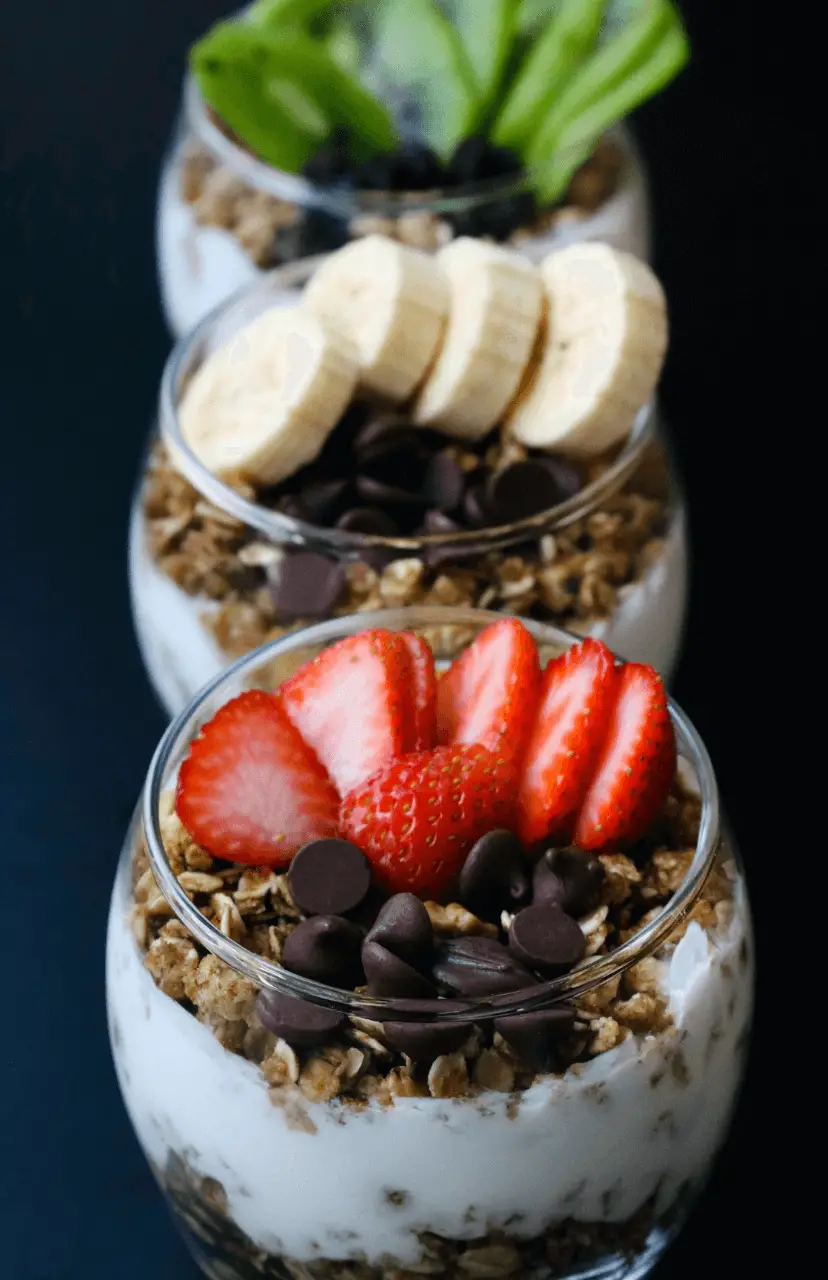
1. Parfait pleaser. Layer vanilla yogurt, granola and fresh fruit in a parfait glass or cup. A yogurt parfait makes the perfect grab-and-go breakfast or snack. And it’s a perfect treat for company—especially if you set up a yogurt parfait bar so guests can have it their way. You may want to include other topping options such as honey and chopped nuts.

2. Fruit dip with finesse. To make a delectable dip for fruit, mix plain yogurt with honey and cinnamon, or mix vanilla yogurt with cinnamon. For added flair, thread chunks of a few different types of fruit on mini kabobs.

3. Savory sauce or veggie dip. Mix plain yogurt with cucumber, herbs and spices for a veggie dip or a sauce for sandwiches and wraps.

4. Spud special. Jazz up a baked potato with your favorite toppings plus a dollop of plain yogurt.

5. Scrumptious soup. Swirl plain yogurt into a bowl of lentil soup, or any type of chilled soup.

6. Spicy dishes–tamed. Add a calming touch to spicy dishes such as chili and enchiladas by topping with plain yogurt. 

7. Super smoothies. For a quick, nutrient-rich breakfast or snack: Put yogurt, fruit, and a little juice or milk in a blender and whip it up. Visit NationalDairyCouncil.org for smoothie recipes.

8. Yogurt cheese. Place yogurt in a sieve lined with cheesecloth and drain over a bowl in the refrigerator for two hours. Spread the “yogurt cheese” on whole-grain toast or bagels in place of cream cheese.

9. Change up breakfast. For a fresh take on pancakes or waffles, top with vanilla or fruit yogurt instead of syrup. Add fresh fruit and sprinkle with chopped nuts.

10. Better bake-off. Use yogurt in place of butter or oil in muffins and quick breads. To stop baked goods from falling flat, add ½ teaspoon of baking soda per cup of yogurt.

DIY: You can make your own yogurt without too much trouble. There are several methods to make yogurt at home including utilizing a yogurt maker. For details and instructional videos, search online for “how to make yogurt.” 

Recipes that feature yogurt: Visit the recipe section of NationalDairyCouncil.org

More about yogurt and health: The Benefits of Yogurt, WebMD

Please share! What’s your favorite way to eat yogurt and/or your favorite recipe with yogurt as an ingredient?

Posted in Calcium, Health benefits of dairy, Lactose Intolerance, Nutrition, Protein, Recipes, Vitamin D, Yogurt | Tagged , , , , , , , | 3 Comments

Out with the Old, In with the New: How to Store Dairy Products

The New Year is the perfect time to start fresh . . .

When was the last time you cleaned out your fridge?

Food safety experts recommend cleaning refrigerators—wiping the entire interior with hot, soapy water and rinsing—at least once a month. Once a week is better, and spills should be cleaned up immediately.

Perishable foods past their prime should be thrown out weekly, according to USDA’s Food Safety and Inspection Service.

But how do you know when milk, cheese and yogurt have overstayed their welcome?

“There seems to be confusion about dates on [food] packages,” says Bethany Thayer, MS, RD, director of wellness programs and strategies with Henry Ford Health System and national spokesperson for the Academy of Nutrition and Dietetics (formerly the American Dietetic Association). “People wonder which date they need to pay attention to.”

“The use by and best if used by dates are really about quality—they’re not safety-related,” explains Thayer. “The sell by or expiration (exp) dates are a matter of food safety.”

Use by: The date an item will pass its peak in quality, according to the manufacturer. If stored properly, dairy foods can be consumed a few days after this date.

Date only (for example: JAN 1): Usually the same as the use by date.

Sell by: The date the manufacturer recommends that the store sell the product. Don’t buy the product if the date has passed. If you already have the product in the fridge at home, eat it within a few days. In general, dairy products keep beyond their sell by dates, but only if properly stored.

That’s why proper storage and handling of food is so important: It’s a matter of food safety and food quality.

Here’s how to ensure the longest shelf life for milk, cheese and yogurt:

Shop Smart
• Dairy products should be among the last items you add to your cart at the grocery store.
• After purchase, travel directly home and put dairy products in the refrigerator. If you know you won’t be going home immediately after grocery shopping, put an ice-filled cooler in your vehicle’s trunk so you can keep perishable foods cold until you get home.

Chilling Facts

Milk (pasteurized):
• Milk will stay fresh 2-3 days after the sell by date, possibly up to a week after the sell by date if it was stored and handled properly.
• The interior of the refrigerator should be below 40°F. Place a refrigerator/freezer thermometer in the refrigerator where it’s easy to see so you can monitor the temperature.
• It’s best to store milk in the refrigerator on an interior shelf, not in the door compartments.
• After you pour milk, return it immediately to the refrigerator. Don’t let it sit on the countertop or table.
• Don’t drink from the container, which introduces bacteria into the milk.
• To prevent bacterial growth, don’t return unused milk to the original container.
• Freezing milk is not recommended due to changes to its texture and taste.

Cheese:
• Cheese should be wrapped tightly in original packaging or other wrapping. Cheese connoisseurs recommend using wax paper.
• If mold appears on hard, natural cheese (other than mold-ripened cheese such as Bleu and Roquefort), remove and discard the mold and about a half-inch of the cheese that surrounded the mold. The rest of the cheese is safe to eat.
• If mold appears on processed cheese, semi-soft cheese or cottage cheese, discard the cheese.
• Hard cheese can be frozen, but the taste and texture may suffer. However, it may be fine to use in cooking.
• Cheese, except cottage cheese, tastes best when served at room temperature. Take cheese out of the refrigerator about 30 minutes before serving.
• In general, cheese with higher moisture content and lower the acidity will spoil faster. Refer to “safe food storage” charts for detailed information: Food Storage Guidelines for Consumers, page 10.
• Cheese made from unpasteurized milk (raw milk cheese) must be aged for at least 60 days before it is sold, according to current government regulations.
• Pregnant women, young children, the elderly and anyone with weakened immune systems should not eat unpasteurized cheese or soft cheese like Camembert and Brie.

Yogurt:
• Yogurt should stay fresh in the refrigerator for 1-2 weeks.
• Freezing yogurt is not recommended due to changes in texture and taste.

Ice Cream:
• Use pasteurized eggs, not raw eggs, when making homemade ice cream. Ice cream has been referred to as one of the most common foods that may cause foodborne illness; however, this only applies to homemade ice cream when it’s made with raw eggs, this is not true of commercial ice cream.
• Store commercial ice cream in the freezer at 0°F or below. The expected shelf life is about two months before quality diminishes.

Food that’s been properly stored and handled is not only safer, it tastes better! Here’s to a healthful and tasteful New Year.

Now, I wonder what Bethany Thayer would say about the worms my husband insists on stashing in the refrigerator during the summer. I bet she would say, “Fight Bac!”

Home Food Safety Resources:

Food Storage Guidelines for Consumers, Virginia Cooperative Extension (see pages 4 and 10 for dairy information)

Fight Bac! Keep Food Safe from Bacteria

FoodSafety.gov

USDA Food Safety

Posted in Cheese, Food Safety, Interviews of experts, Milk, Shopping Tips, storing dairy products, Yogurt | Tagged , , , , , , , , , | 1 Comment

Smoothies: Beverages of Substance

Smoothies are beverage super stars! They’re quick and easy to prepare, delicious, and very versatile — with so many possible ingredient combinations, you’re sure to find at least one favorite. Smoothies are great for breakfast, snack time or any time.

See how easy it is to whip up a Blues Buster Smoothie:

Blues Buster Smoothie
Ingredients:
• 1 (6-ounce) container low-fat blueberry yogurt
• 1/2 cup apple juice
• 1/3 cup fresh or frozen blueberries
• 1/3 cup frozen sliced peaches
• 5-6 ice cubes
Directions: Blend all ingredients with ice (amount of ice will vary depending on desired consistency). Pour into a glass and serve chilled.

When made with fruit and milk or yogurt, smoothies pack a nutrient punch.

Milk boasts nine essential nutrients: calcium, potassium, protein, phosphorus, niacin, riboflavin and vitamins A, D and B12. In fact, milk offers three of the four nutrients children and adults are often missing, according to the 2010 Dietary Guidelines for Americans. The four “nutrients of concern” are calcium, potassium, vitamin D and fiber.

Whip up a smoothie with milk and fruit and you’ll get all four of these needed nutrients. Milk contains calcium, potassium and vitamin D (plus more) and fruit contains fiber (plus more).

Smoothies contain calories, so be wise with portion size so you don’t overdo. Try these tips to lessen the calorie load:
*Choose a smaller size
*Order without added sugar or other sweeteners (the fruit or fruit juice makes it sweet)
*Prepare or order milk-based smoothies using fat-free or low-fat milk.

Consumer Reports magazine recently conducted a taste test of top-selling smoothie brands. The taste testers included kids as well as food experts who evaluated taste and nutrition. The dairy-based Lifeway Lowfat Kefir Strawberry is a good source of calcium and protein and got first place for taste. In the fruit-based smoothie category, the winner was Bolthouse Farms Berry Boost Blend, which is 100% juice and contains four grams of fiber and lots of vitamin C.

It’s quick and easy to make your own, plus you can control the type and amount of ingredients.

Here are three more of my favorite smoothie recipes:

Bone Appetit Banana Smoothie

Mango Yogurt Smoothie

Pomegranate Smoothie

Share your favorite!

Posted in Milk, Nutrition, Recipes, Videos | Tagged , | 3 Comments