The Dish on a New Contributor


Hello Dairy Dishers!

My name is Amy Viselli, I am a registered dietitian and Manager of Nutrition Outreach for United Dairy Industry of Michigan. Before I get started blogging, I want to take a little time to introduce myself, so you get a better feel for who I am and why I’m here. I’ve been excited about health and wellness my entire life and I’m happy to be able to share some of the great information I’ve learned about the importance of good nutrition and regular physical activity throughout the years!

Growing up in a small mid-Michigan town, it was important for us to have “family dinners,” to try new foods together, and to be involved in activities that promoted physical activity, health, wellness, and togetherness.

I spent a lot of my free time participating in gymnastics and diving, so when I was given the opportunity to attend Michigan State University and be an active member of their Women’s Swimming and Diving Team, I dove in head first! During my time at MSU, I studied dietetics and kinesiology with a health promotion specialization. After college, I moved to the big city of Chicago to complete my dietetic internship at Loyola University Chicago, where my passion for nutrition grew exponentially.

I started my career as a clinical dietitian in a small town hospital and realized that I desired to work in a community setting, encouraging healthy lifestyles through health promotion. A well balanced diet, which includes milk, cheese and yogurt, has always been an important part of my life, so as a registered dietitian it was a perfect fit when I started working with UDIM two years ago.

I look forward to having the opportunity to share scientific, evidence-based information with you on the Dairy Dish. Just the other day I came across a great article that highlights the benefits of chocolate milk, a childhood favorite of mine!

I think Dr. John Pfenninger put it best when he wrote, “Milk may be the most nutritious item that many children receive, especially those of low income who are at high risk of malnutrition.”  He goes on to explain, “Low-fat or no-fat chocolate milk does have the potential for a slight increase in calories in a child’s diet, but provides a very high nutrient value, especially when compared to sodas/pop and sugar sweetened fruit juices.”

Until next time…

Posted in flavored milk, Nutrition | Tagged , | Comments Off

Foods that Fight High Blood Pressure

According to the American Heart Association, one in three adults has high blood pressure. Even young adults are not immune. A new study published in the journal Epidemiology found that high blood pressure affects one in five young adults.

If uncontrolled, high blood pressure can lead to heart disease, kidney disease, stroke and blindness.

High blood pressure, also known as hypertension, is defined as blood pressure higher than 140/90 millimeters of mercury (mmHg).

The good news is that high blood pressure can be prevented and treated by lifestyle changes such as following a healthful eating plan. Research indicates that the Dietary Approaches to Stop Hypertension (DASH) eating plan significantly lowers blood pressure. DASH also may lower total cholesterol and LDL cholesterol, improve bone health, and improve the body’s ability to manage blood glucose levels.

The DASH eating plan is endorsed by the American Heart Association, the Academy of Nutrition and Dietetics (formerly the American Dietetic Association), the National Medical Association and the National Heart, Lung and Blood Institute. In January 2012, U.S. News & World Report released its second annual evaluation of 25 popular diets. DASH ranked number one in the categories of Best Diets Overall, Best Diets for Healthy Eating and Best Diabetes Diets.

By following the DASH eating plan, blood pressure may drop significantly in just 1-2 weeks. In studies of people with stage 1 hypertension (140-159/90-99 mmHg), research shows DASH lowers blood pressure as much as taking one high blood pressure medication. When those same people exercised regularly, further reduced salt intake and lost weight, the effect was the same as taking two blood pressure medications.

DASH is basically a well-balanced, plant-based eating plan. There’s no need for special foods or hard-to-follow recipes and there are excellent resources to help with meal planning, grocery shopping and meal preparation (see “Doing DASH?” below).

What is DASH’s secret weapon against high blood pressure? It dishes up a cornucopia of nutrient-rich foods: fruits, vegetables, whole grains, fat-free and low-fat dairy products and lean sources of protein. The nutrients in these foods—such as potassium, calcium, magnesium and protein—work together to help lower blood pressure. DASH is also low in total fat, saturated fat, cholesterol, added sugars, and moderate to low in sodium.

“I recommend DASH because it’s a really good, balanced eating plan,” says Laura McCain, registered dietitian and chef with Munson Medical Center in Traverse City, Michigan. “Often, people feel that eating healthy is complicated and so they give up, or make it so rigid that they can’t do it. The DASH eating plan gives an overall picture of balanced eating. I encourage people to look at the meal plan and menus to see, in general, what meals should look like. Then, they can take those concepts and make it fit with their tastes and lifestyle.”

McCain believes the reason many people don’t eat healthfully is that they don’t know how to cook. “It just takes figuring out how to make food taste better,” she says. “Learning to cook is a mentoring process. Look for cooking classes and demos in your community, start a cooking club with friends, or watch the cooking channel or online cooking videos. The classes will teach you techniques and help you build a Rolodex of recipes in your head. You can always use a cookbook, but when you’re tired, it’s nice to be able to make something that you’ve made so many times, it’s automatic.”

Doing DASH? Resources to Help:

DASH Diet Oregon

Your Guide to Lowering Your Blood Pressure interactive website, National Heart, Lung and Blood Institute

In Brief: Your Guide to Lowering Your Blood Pressure with DASH (6 pages)

Your Guide to Lowering Your Blood Pressure with DASH (64 pages)

DASH Diet: Healthy Eating to Lower Your Blood Pressure, Mayo Clinic

Daily DASH Diary, National Dairy Council

DASH Health Education Kit, Dairy Council Digest

Spotlight on Dairy Foods: Dairy Nutrients & Blood Pressure, Dairy Council Digest

Book: The DASH Diet Action Plan by Marla Heller

Posted in Health benefits of dairy, Interviews of experts, Nutrition | Tagged , , , , , | Comments Off

What’s on your plate–and in your cup?

How many times have you heard the recommendation to “eat a well-balanced diet”? Probably so often that the saying has lost its impact—and possibly gained the power to perturb. What does “eat a well-balanced diet” mean, anyway?

Every five years since 1980, the U.S. Department of Agriculture has provided Americans with updated Dietary Guidelines as well as a visual representation of the recommendations to help us understand and apply them to our lives. In June 2010, MyPyramid was replaced with MyPlate, the visual representation of the recently released 2010 Dietary Guidelines for Americans.

MyPlate illustrates the five food groups that are the foundation of a healthful eating plan. The plate is divided into four sections for vegetables, fruits, grains and protein; the cup represents dairy products such as milk, cheese and yogurt.
• Vegetables – Make half your plate fruits and vegetables: Vary your veggies
• Fruits – Make half your plate fruits and vegetables: Focus on fruit
• Grains – Make at least half your grains whole grains
Milk and milk productsGet your calcium-rich foods: Switch to fat-free or low-fat (1%) milk
• Protein – Go lean with protein: Vary your protein food choices

In a realistic manner, the MyPlate graphic shows us what a well-balanced meal should look like as we sit at the table, ready to enjoy nutrient-rich foods and beverages.

And enjoyment is a significant part of MyPlate’s philosophy. Instead of focusing on what not to eat, MyPlate emphasizes what we need to eat more of—vegetables and fruits, whole grains, milk and milk products and seafood—in order to get key nutrients that most Americans are lacking. Enjoyment of nutrient-rich foods; being physically active; and cutting back on foods high in solid fats, added sugars and salt helps us achieve and maintain overall health and a healthy weight.

In fact, one of MyPlate’s “10 Tips to a Great Plate” is:

Enjoy your food, but eat less. Take the time to fully enjoy your food as you eat it. Eating too fast or when your attention is elsewhere may lead to eating too many calories. Pay attention to hunger and fullness cues before, during, and after meals. Use them to recognize when to eat and when you’ve had enough.

The MyPlate website, ChooseMyPlate.gov, offers many resources for a healthy lifestyle—including tips, tools, sample menus and recipes. Fill your plate and cup the nutrient-rich way for optimal health and wellbeing. Bon appetit!

On the Web:

ChooseMyPlate.gov

Dietary Guidelines for Americans

“Get Your Plate in Shape!” 2012 National Nutrition Month campaign, Academy of Nutrition and Dietetics

To purchase MyPlate nutrition education materials for adult/teen or child audiences (Michigan residents only), contact United Dairy Industry of Michigan, 1-800-241-6455.


Posted in Milk, Nutrition, Recipes | Tagged , , | 20 Comments

10 Ways to Welcome Yogurt (and Wellness) into Your Life

As a registered dietitian and one who appreciates delicious, quick, and easy meals and snacks, yogurt has my undying devotion. That’s because yogurt is versatile, tasty, and nutritious to boot.

Yogurt is an excellent source of calcium and riboflavin and a good source of protein, potassium, vitamin B12 and riboflavin. Plus, some brands of yogurt contain vitamin D (check the label).

A type of yogurt called Greek yogurt has a thicker texture and contains less sugar and more protein. If you want these specific attributes, buy Greek yogurt (yogurt that has been strained) rather than Greek-style yogurt (yogurt with added thickeners). 

Those with lactose intolerance usually tolerate yogurt very well. Why? The good bacteria in yogurt (the “live and active cultures”) break down the lactose (milk sugar) into simple sugars that are easy for people with lactose intolerance to digest.

Due to yogurt’s nutrients (which come from milk), enjoying 3 servings of low-fat or fat-free milk, cheese or yogurt every day as a part of a healthful eating plan may lower blood pressure, improve bone health, and reduce the risk of osteoporosis, heart disease and type 2 diabetes.

In addition to eating it straight from the container, here are 10 ways to enjoy yogurt

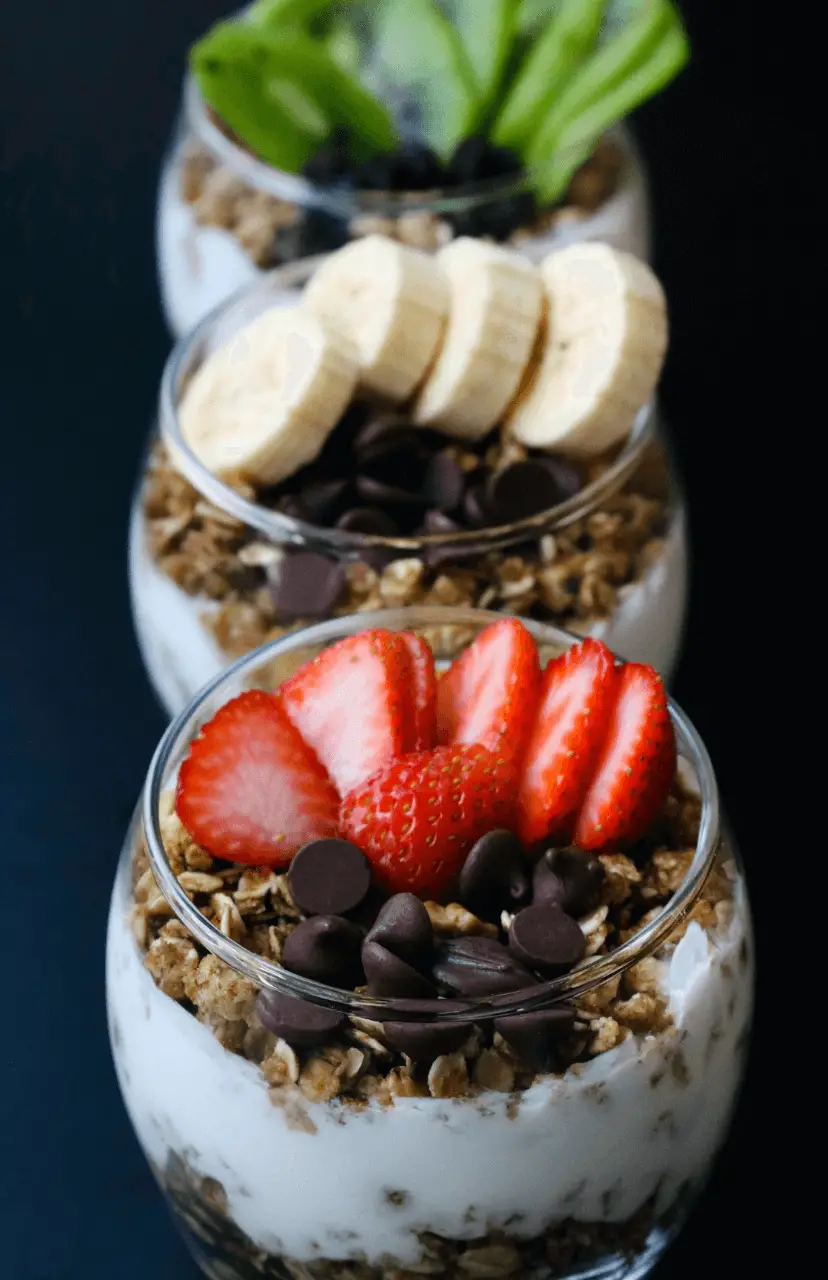
1. Parfait pleaser. Layer vanilla yogurt, granola and fresh fruit in a parfait glass or cup. A yogurt parfait makes the perfect grab-and-go breakfast or snack. And it’s a perfect treat for company—especially if you set up a yogurt parfait bar so guests can have it their way. You may want to include other topping options such as honey and chopped nuts.

2. Fruit dip with finesse. To make a delectable dip for fruit, mix plain yogurt with honey and cinnamon, or mix vanilla yogurt with cinnamon. For added flair, thread chunks of a few different types of fruit on mini kabobs.

3. Savory sauce or veggie dip. Mix plain yogurt with cucumber, herbs and spices for a veggie dip or a sauce for sandwiches and wraps.

4. Spud special. Jazz up a baked potato with your favorite toppings plus a dollop of plain yogurt.

5. Scrumptious soup. Swirl plain yogurt into a bowl of lentil soup, or any type of chilled soup.

6. Spicy dishes–tamed. Add a calming touch to spicy dishes such as chili and enchiladas by topping with plain yogurt. 

7. Super smoothies. For a quick, nutrient-rich breakfast or snack: Put yogurt, fruit, and a little juice or milk in a blender and whip it up. Visit NationalDairyCouncil.org for smoothie recipes.

8. Yogurt cheese. Place yogurt in a sieve lined with cheesecloth and drain over a bowl in the refrigerator for two hours. Spread the “yogurt cheese” on whole-grain toast or bagels in place of cream cheese.

9. Change up breakfast. For a fresh take on pancakes or waffles, top with vanilla or fruit yogurt instead of syrup. Add fresh fruit and sprinkle with chopped nuts.

10. Better bake-off. Use yogurt in place of butter or oil in muffins and quick breads. To stop baked goods from falling flat, add ½ teaspoon of baking soda per cup of yogurt.

DIY: You can make your own yogurt without too much trouble. There are several methods to make yogurt at home including utilizing a yogurt maker. For details and instructional videos, search online for “how to make yogurt.” 

Recipes that feature yogurt: Visit the recipe section of NationalDairyCouncil.org

More about yogurt and health: The Benefits of Yogurt, WebMD

Please share! What’s your favorite way to eat yogurt and/or your favorite recipe with yogurt as an ingredient?

Posted in Calcium, Health benefits of dairy, Lactose Intolerance, Nutrition, Protein, Recipes, Vitamin D, Yogurt | Tagged , , , , , , , | 51 Comments

Out with the Old, In with the New: How to Store Dairy Products

The New Year is the perfect time to start fresh . . .

When was the last time you cleaned out your fridge?

Food safety experts recommend cleaning refrigerators—wiping the entire interior with hot, soapy water and rinsing—at least once a month. Once a week is better, and spills should be cleaned up immediately.

Perishable foods past their prime should be thrown out weekly, according to USDA’s Food Safety and Inspection Service.

But how do you know when milk, cheese and yogurt have overstayed their welcome?

“There seems to be confusion about dates on [food] packages,” says Bethany Thayer, MS, RD, director of wellness programs and strategies with Henry Ford Health System and national spokesperson for the Academy of Nutrition and Dietetics (formerly the American Dietetic Association). “People wonder which date they need to pay attention to.”

“The use by and best if used by dates are really about quality—they’re not safety-related,” explains Thayer. “The sell by or expiration (exp) dates are a matter of food safety.”

Use by: The date an item will pass its peak in quality, according to the manufacturer. If stored properly, dairy foods can be consumed a few days after this date.

Date only (for example: JAN 1): Usually the same as the use by date.

Sell by: The date the manufacturer recommends that the store sell the product. Don’t buy the product if the date has passed. If you already have the product in the fridge at home, eat it within a few days. In general, dairy products keep beyond their sell by dates, but only if properly stored.

That’s why proper storage and handling of food is so important: It’s a matter of food safety and food quality.

Here’s how to ensure the longest shelf life for milk, cheese and yogurt:

Shop Smart
• Dairy products should be among the last items you add to your cart at the grocery store.
• After purchase, travel directly home and put dairy products in the refrigerator. If you know you won’t be going home immediately after grocery shopping, put an ice-filled cooler in your vehicle’s trunk so you can keep perishable foods cold until you get home.

Chilling Facts

Milk (pasteurized):
• Milk will stay fresh 2-3 days after the sell by date, possibly up to a week after the sell by date if it was stored and handled properly.
• The interior of the refrigerator should be below 40°F. Place a refrigerator/freezer thermometer in the refrigerator where it’s easy to see so you can monitor the temperature.
• It’s best to store milk in the refrigerator on an interior shelf, not in the door compartments.
• After you pour milk, return it immediately to the refrigerator. Don’t let it sit on the countertop or table.
• Don’t drink from the container, which introduces bacteria into the milk.
• To prevent bacterial growth, don’t return unused milk to the original container.
• Freezing milk is not recommended due to changes to its texture and taste.

Cheese:
• Cheese should be wrapped tightly in original packaging or other wrapping. Cheese connoisseurs recommend using wax paper.
• If mold appears on hard, natural cheese (other than mold-ripened cheese such as Bleu and Roquefort), remove and discard the mold and about a half-inch of the cheese that surrounded the mold. The rest of the cheese is safe to eat.
• If mold appears on processed cheese, semi-soft cheese or cottage cheese, discard the cheese.
• Hard cheese can be frozen, but the taste and texture may suffer. However, it may be fine to use in cooking.
• Cheese, except cottage cheese, tastes best when served at room temperature. Take cheese out of the refrigerator about 30 minutes before serving.
• In general, cheese with higher moisture content and lower the acidity will spoil faster. Refer to “safe food storage” charts for detailed information: Food Storage Guidelines for Consumers, page 10.
• Cheese made from unpasteurized milk (raw milk cheese) must be aged for at least 60 days before it is sold, according to current government regulations.
• Pregnant women, young children, the elderly and anyone with weakened immune systems should not eat unpasteurized cheese or soft cheese like Camembert and Brie.

Yogurt:
• Yogurt should stay fresh in the refrigerator for 1-2 weeks.
• Freezing yogurt is not recommended due to changes in texture and taste.

Ice Cream:
• Use pasteurized eggs, not raw eggs, when making homemade ice cream. Ice cream has been referred to as one of the most common foods that may cause foodborne illness; however, this only applies to homemade ice cream when it’s made with raw eggs, this is not true of commercial ice cream.
• Store commercial ice cream in the freezer at 0°F or below. The expected shelf life is about two months before quality diminishes.

Food that’s been properly stored and handled is not only safer, it tastes better! Here’s to a healthful and tasteful New Year.

Now, I wonder what Bethany Thayer would say about the worms my husband insists on stashing in the refrigerator during the summer. I bet she would say, “Fight Bac!”

Home Food Safety Resources:

Food Storage Guidelines for Consumers, Virginia Cooperative Extension (see pages 4 and 10 for dairy information)

Fight Bac! Keep Food Safe from Bacteria

FoodSafety.gov

USDA Food Safety

Posted in Cheese, Food Safety, Interviews of experts, Milk, Shopping Tips, storing dairy products, Yogurt | Tagged , , , , , , , , , | 10 Comments

Smoothies: Beverages of Substance

Smoothies are beverage super stars! They’re quick and easy to prepare, delicious, and very versatile — with so many possible ingredient combinations, you’re sure to find at least one favorite. Smoothies are great for breakfast, snack time or any time.

See how easy it is to whip up a Blues Buster Smoothie:

Blues Buster Smoothie
Ingredients:
• 1 (6-ounce) container low-fat blueberry yogurt
• 1/2 cup apple juice
• 1/3 cup fresh or frozen blueberries
• 1/3 cup frozen sliced peaches
• 5-6 ice cubes
Directions: Blend all ingredients with ice (amount of ice will vary depending on desired consistency). Pour into a glass and serve chilled.

When made with fruit and milk or yogurt, smoothies pack a nutrient punch.

Milk boasts nine essential nutrients: calcium, potassium, protein, phosphorus, niacin, riboflavin and vitamins A, D and B12. In fact, milk offers three of the four nutrients children and adults are often missing, according to the 2010 Dietary Guidelines for Americans. The four “nutrients of concern” are calcium, potassium, vitamin D and fiber.

Whip up a smoothie with milk and fruit and you’ll get all four of these needed nutrients. Milk contains calcium, potassium and vitamin D (plus more) and fruit contains fiber (plus more).

Smoothies contain calories, so be wise with portion size so you don’t overdo. Try these tips to lessen the calorie load:
*Choose a smaller size
*Order without added sugar or other sweeteners (the fruit or fruit juice makes it sweet)
*Prepare or order milk-based smoothies using fat-free or low-fat milk.

Consumer Reports magazine recently conducted a taste test of top-selling smoothie brands. The taste testers included kids as well as food experts who evaluated taste and nutrition. The dairy-based Lifeway Lowfat Kefir Strawberry is a good source of calcium and protein and got first place for taste. In the fruit-based smoothie category, the winner was Bolthouse Farms Berry Boost Blend, which is 100% juice and contains four grams of fiber and lots of vitamin C.

It’s quick and easy to make your own, plus you can control the type and amount of ingredients.

Here are three more of my favorite smoothie recipes:

Bone Appetit Banana Smoothie

Mango Yogurt Smoothie

Pomegranate Smoothie

Share your favorite!

Posted in Milk, Nutrition, Recipes, Videos | Tagged , | 37 Comments

Clearing Up the Confusion: “Vitamin D Milk”

We all know that whole milk contains vitamin D. Every visit to the grocery store reinforces this fact. Containers of whole milk are emblazoned with “Vitamin D Milk” on the label. The association is so strong that many people refer to whole milk as “vitamin D milk”.

But something important gets lost in translation: The fact that other varieties of cow’s milk sold in grocery stores also contain vitamin D.

This bears repeating because it’s a little-known fact: Whole, reduced-fat (2%), low-fat (1/2% and 1%) and fat-free (skim) milk all contain the same amount of vitamins and minerals, including vitamin D. The only difference: The amount of fat, and therefore, the amount of calories.

Vitamin D MilkCow’s milk is fortified at the standardized level of 400 IUs (International Units) of vitamin D per quart. That means each cup of milk (8 oz.) contains 100 IUs of vitamin D.

Let’s put the level of 100 IUs of vitamin D per serving in perspective: The current recommendation for vitamin D intake for adults is 200-400 IUs per day (depending on age) according to The Institute of Medicine, however, many nutrition experts believe adults should get 1,000-2,000 IUs of vitamin D per day for overall health and to help prevent chronic disease.

My point is that milk is a good source of vitamin D—in fact it’s the largest single food source of vitamin D in the U.S. according to an analysis of data from a national health and nutrition survey (NHANES, 1999-2002). But it’s highly probable that we need even more vitamin D than we obtain by eating a well-balanced diet, even a diet that consistently includes vitamin D-rich foods such as salmon, tuna, eggs, fortified dairy foods and fortified cereals.

Stay tuned while researchers conduct additional studies on vitamin D and health and release new dietary intake recommendations in 2011. Since vitamin D can be manufactured in the skin with exposure to sunlight, prudent sun exposure may be a part of the expert’s recommendations.

Vitamin D was discovered around 1920. Researchers knew that there was a nutritional factor in cod liver oil that cured rickets (bone softening and malformations in children) but their research indicated it wasn’t vitamin A, and since vitamins B and C had already been discovered, they dubbed the rickets-curing factor “vitamin D”.

In 1932, milk was chosen as the delivery vehicle for vitamin D because milk was widely consumed by children at the time. Vitamin D fortification of milk was endorsed in 1933 by the American Medical Association Council on Foods and Nutrition.

Although milk processing plants aren’t required to fortify milk with vitamin D, the vast majority do so to help protect public health. Ninety-eight percent of milk sold at retail is fortified with vitamin D.

To ensure that the level of vitamin D fortification in milk meets specifications, milk is routinely tested for its vitamin D content. Milk monitoring is conducted primarily by state governments in cooperation with the Food and Drug Administration (FDA). The acceptable range allowed for vitamin D fortification of milk is not less than 100% and not more than 150% of label claims (i.e. 400-600 I.U. vitamin D per quart is acceptable).

In Michigan, it’s estimated that 98 percent of adults are vitamin D deficient. In the U.S., it’s estimated that 9 percent of children and teens are vitamin D deficient and 61 percent are vitamin D insufficient.

Include plenty of vitamin D-rich foods in your diet and discuss aspects of vitamin D and health with your doctor or dietitian, including diet, sun exposure and the possible need for vitamin D supplements.

Get the D You Need From:

  • A little sun. Sensible sun exposure is one source. Some experts suggest 15 minutes in the sun at least three times a week; then apply sunscreen and/or cover up.
  • A variety of vitamin D-rich foods. Include vitamin D-rich foods in a well-balanced diet. Check the Nutrition Facts panel on the food label for vitamin D content.
  • A vitamin D supplement. Chances are, you’ll also need a supplement. The latest research indicates most adults need 1,000-2,000 IUs of vitamin D daily.

Food Sources of Vitamin D (IUs):
For packaged food, check the label for vitamin D content since it may vary depending on the brand.
Cod liver oil, 1 Tbsp: 1,360*
Salmon, wild, 3.5 oz: 988
Salmon, farm-raised, 3.5 oz: 245-360
Sardines, canned in oil, drained, 1.75 oz: 250
Tuna, canned in oil, 3 oz: 200
Mackarel, 3.5 oz: 24-345
Milk (vitamin D fortified fat-free, low-fat, reduced-fat and whole), 1 cup: 100
Yogurt (vitamin D fortified), 6 oz: 40
Cereal (vitamin D fortified), 1 cup: 40
Orange juice (vitamin D fortified), 6 oz: 38
Kraft Singles cheese product (vitamin D fortified), 1 slice: 34
Margarine (vitamin D fortified), 1 tsp: 20
Egg, 1: 20

*Go easy on the cod liver oil because it’s also very high in vitamin A.

More:

Milk’s Unique Nutrient Package:
http://www.nationaldairycouncil.org/SiteCollectionDocuments/health_wellness/dairy_nutrients/MILKsUniqueNutrientPackage.pdf

Vitamin D and Health:  http://www.vitamindhealth.org/

Office of Dietary Supplements, National Institutes of Health: http://ods.od.nih.gov/factsheets/vitamind.asp

Research review: “A New Appreciation of Vitamin D,” Dairy Council Digest, March/April 2007. http://www.nationaldairycouncil.org/SiteCollectionDocuments/research/dairy_council_digests/2007/dcd782.pdf

Karen

Posted in Health benefits of dairy, Milk, Nutrition, Shopping Tips, Vitamin D | Tagged , , | 12 Comments

Dairy and Sustainability: An interview with Paul Gross

Paul Gross in switchgrass field

The Dairy Dish interviewed Paul Gross, an Extension Educator with Michigan State University (MSUE)-Isabella County, about what Michigan dairy farmers are doing to farm in an environmentally sound, sustainable manner. Paul provides specific examples to expand on my previous post that explains why dairy foods are an eco-friendly choice.

The Dairy Dish: What is the scope of your job with MSUE?

Paul:
I work with the Great Lakes Cover Crop Initiative in partnership with Purdue University and Ohio State University as the Lake Huron coordinator. I help farmers increase cover crop acreage and work with tillage. I also work with bioenergy crops—to produce different types of crops to be used as biofuel.

The Dairy Dish: How do you help dairy farmers care for the environment and practice sustainable farming methods?

Paul:
I work on the crop side of dairy farming. I help dairy farmers optimize crop production by implementing sustainable practices such as the use of cover crops. Using cover crops, such as oilseed radish and oats, builds organic matter and root mass in the soil and keeps the soil covered which reduces erosion, minimizes tillage, increases the fertility and water-holding capacity of soil, and reduces water use, fertilizer use and energy use. Cover crop use by dairy farmers has increased tremendously.

Agriculture is a huge carbon sink: Farmland can absorb more carbon than it releases when managed properly. The carbon is sequestered in the soil and stored there as organic matter. When carbon stays in the soil, the farm’s carbon footprint decreases.

The Dairy Dish: Can you share some examples of what in particular the dairy farmers you work with are doing?

Paul:
One of dairy farm families I work with has a no-till farm. The manure is managed by using a drag hose to inject the manure under the soil. The manure application is based on soil and feed tests and is applied within the guidelines of the comprehensive nutrient management plan.

Another farmer surface-applies manure and then plants cover crops of oilseed radish and oats over it. I’m seeing a lot more cover crop usage before and after manure application. The roots grab the nutrients from the manure and hold them in the soil and utilize them for multiple years so there’s no manure run-off.

The Dairy Dish: Overall, what are your thoughts about dairy farming, the environment and sustainability?

Paul:
The biggest surprise that the non-farming community has when visiting a dairy farm is the technology dairy farmers use: the precision application of manure, the testing, and the computerization such as the electronic chips hung around the cows’ necks to monitor their health. People are also amazed at how dairy farms are so much more efficient—they use less water, land, energy, and protect the environment as best they can. More and more farms are having energy audits and implementing practices that reduce energy use.

Dairy farmers are reducing fossil fuel use and sequestering carbon—just to name a few best practices—to reduce the factors that influence climate change.

Paul Gross explains how dairy farmers are the original stewards of the land.

More:

The Michigan Dairy News Bureau

Milk Is Local

Dairy Farming Today

Innovation Center for U.S. Dairy: Sustainability

Posted in Interviews of experts, Sustainability, Videos | Tagged , , , , , , , , | 33 Comments

Dairy Myth-busters Series: Dairy foods are not eco-friendly


Dairy products are, in fact, nutrient-rich foods that are produced using environmentally sound, sustainable, humane practices.

The myth that dairy foods are not “green” is widespread—it’s even conveyed by misinformed health professionals.

When considering “green” food choices, it is crucial to have a holistic perspective by taking all of these factors into consideration: The health and well-being of people, animals and the planet.

America’s dairy farmers have always been committed to preserving the earth’s natural resources while providing nutritious and wholesome foods.

Dairy farmers live and work on their farms, so they understand the importance of protecting our natural resources. According to the U.S. Department of Agriculture, 98% of U.S. dairy farms are family owned and operated, sometimes by multiple generations of the family.
 
Dairy and the health and well-being of people
• Dairy foods deliver a unique combination of nine nutrients that are essential for human growth and development.
• The 2010 Dietary Guidelines for Americans identify four “nutrients of concern”—those that most children and adults don’t get enough of. Milk, cheese and yogurt provide three of the four nutrients of concern: calcium, potassium and vitamin D.
• The consumption of milk, cheese and yogurt improve overall diet quality. Dairy can be a part of all meal plans including vegetarian diets (except the vegan diet which does not include any foods from animal sources).
• Milk, cheese and yogurt are excellent sources of high-quality protein which is especially important for muscle-building, to help prevent age-related muscle loss and to help manage weight.
• As a part of a healthful diet, the adequate intake of milk, cheese and yogurt may help reduce the risk of osteoporosis, hypertension, obesity, colon cancer and metabolic syndrome (a cluster of conditions that can lead to heart disease and type 2 diabetes).
• From farm to fridge, milk goes through strict quality controls to ensure freshness, purity and great taste.

Dairy and the health and well-being of animals
• Dairy farmers care for their cows by providing a nutritious diet, good medical care and healthy living conditions to produce high-quality milk.
• Dairy farmers work closely with veterinarians to keep their cows healthy and comfortable. Dairy cows receive periodic checkups, vaccinations and prompt treatment of illness.
• Dairy farmers work with nutritionists to ensure their cows get the nutrition they need.
• Dairy farmers provide their cows with clean, soft bedding and access to food and water 24 hours per day.
• Many farmers house their cows in freestall barns which allow the cows to move about to eat, drink or rest whenever they like. These barns let in fresh air and sunshine and provide shade and protection from the wind, cold or rain.

Dairy and the health and well-being of the planet
• U.S. milk production, processing and transportation contributes to only 2% of U.S. greenhouse gas emissions.
• Constant innovation on dairy farms has led to widespread adoption of best management practices, and America’s dairy farms are more efficient today than ever before due to improvements in feeding rations, animal health programs, cow comfort and overall farm management practices.
• The dairy industry has reduced the carbon footprint of its products by 63% over the past 60 years.
• Both organic and conventionally produced dairy products are eco-friendly choices. In general, the amount of greenhouse gas emissions from dairy farms is driven by particular farm management practices, not by whether the farm is organic or not.
• Farmers work with local government agencies, extension services, scientists and public interest groups to implement beneficial environmental solutions such as manure composting programs and wetlands conservation.

As the world’s population growth puts pressure on our finite resources, the dairy industry is working together to continue to provide products that are nutritious, produced responsibly and economically viable for all.

Coming next: An interview with Paul Gross, Extension Educator, Michigan State University Extension-Isabella County. Paul shares specifics about what Michigan dairy farmers are doing to protect the environment.

For more:
The Michigan Dairy News Bureau
Milk is Local
Dairy Farming Today

Posted in Food Safety, Health benefits of dairy, Myths about dairy, Nutrition, Sustainability | Tagged , , , , , , , , , , , , , | 21 Comments

Cheddar N Ham Muffin Recipe: You’ve Got to See It to Believe It!

“Everything’s better with cheddar.”
-Amy Schmid, registered dietitian, Nebraska

If you’re looking for a quick, easy, nutritious and delicious make-ahead breakfast or snack, Cheddar N Ham Muffins are for you!

In this episode of the Michigan Farm & Garden show, host Jody Pollok-Newsom and I whip up a batch so you can see how quick and easy this one-bowl recipe really is.

Enjoy!

Cheddar N Ham Muffins

Makes 9 Servings
Prep Time: 5 min
Cook Time: 15 min

Ingredients
3/4 cup lowfat sharp Cheddar cheese
1/4 cup fresh grated Parmesan cheese
1 3/4 cup reduced fat all-purpose baking mix
1 cup 1% low-fat milk
1/2 tsp black pepper
1/4 cup lowfat ham, finely chopped

Directions
Mix cheeses, milk and baking mix together; add pepper and ham. Mix well and spoon into lined muffin pans 1/2 full. Bake in preheated 400 degree oven 12-15 minutes or until golden brown.

Nutritional Facts
Calories: 140
Fat: 4 g
Saturated Fat: 2 g
Cholesterol: 10 mg
Sodium: 470 mg
Calcium: 20% Daily Value
Protein: 8 g
Carbohydrates: 18 g
Dietary Fiber: 0 g

Recipe created by Get 3! subscriber Carolann Kline of Oklahoma
Source: NationalDairyCouncil.org
Direct link: Cheddar N Ham Muffins

Posted in Cheese, Recipes, Videos | Tagged , , , , , , , , , , , | 46 Comments